
Story of Badrinath Temple: Why This Himalayan Shrine Is So Sacred

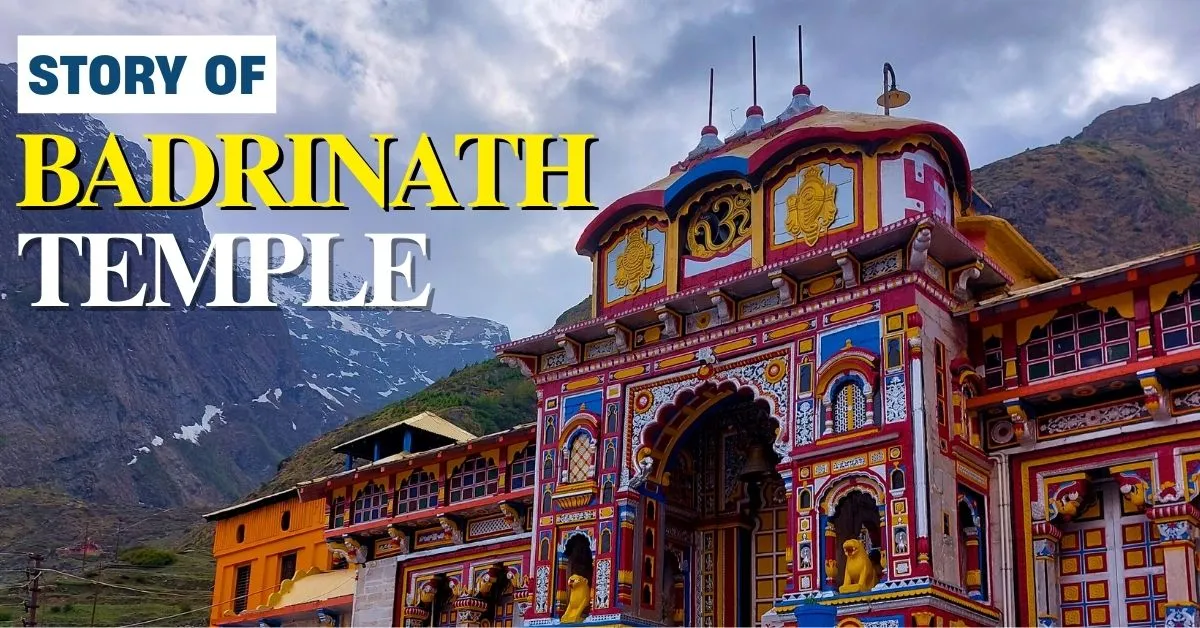
Badrinath temple is one of the most important and holy temples in India. It is located in a small town called Badrinath in the Chamoli district of Uttarakhand. It is a Hindu temple that is dedicated to Lord Vishnu. It is also known as the Badrinarayan temple. This temple is surrounded by the huge snow-covered mountains, tall trees, and a very peaceful atmosphere. Every year, lakhs of devotees from different regions visit this temple to take the blessings of Lord Vishnu. In this article, we will know the story of badrinath temple and learn about the importance of this temple.
This temple is also a part of the famous Char Dham Yatra, which includes Badrinath, Kedarnath, Gangotri, and Yamunotri. Among these temples Badrinath temple is considered very important because of its ancient story and strong spiritual energy. Due to extreme weather conditions in the Himalayas, this temple is open only for a few months every year. What makes the temple truly special is not just its location but also the beautiful story of badrinath temple connected to it.
History of Badrinath Temple
There are no solid historical records regarding the construction of the Badrinath temple. However, mentions of the presiding deity, Lord Badrinath, are found in the Vedic scriptures. It is said that during the reign of Emperor Ashoka in the 3rd century BCE, Buddhism began to spread rapidly in the Himalayan regions. Many scholars believe that at that time, the Badri pilgrimage site was converted into a Buddhist monastery or Vihara. One reason for this is believed to be that Badrinath was located on ancient trade routes, which made it easy for Buddhist monks to reach here. Even today, the bright-colored wooden decoration, wide windows, and architectural style of the Badrinath temple give a glimpse of Tibetan Buddhist architecture. According to some traditions, it is believed that a Buddhist idol was also installed here until the 8th century.
Story of Badrinath Temple
The Story of Shiv and Parvati
It is said that Badrinath Dham was earlier the residence of Lord Shiva. But later, Lord Vishnu asked for this place from Lord Shiv. According to mythological stories, at one time, Lord Vishnu was searching for a calm and suitable place for meditation and penance. He found this place on the banks of the Alaknanda River very holy and peaceful. But at that time, this place used to be the residence of Lord Shiva and Mother Parvati. Lord Vishnu thought of a trick. One day, when Lord Shiva and Mother Parvati had gone out for a walk, Lord Vishnu took the form of a child and started crying at the door. When Shiva and Parvati returned, they saw a crying child at the door. Mother Parvati’s motherhood awakened, and she expressed the desire to pick up that child and take him inside the house.
But Shivji warned that this is not an ordinary child. He appears to be illusory. Mother Parvati, ignoring Shiva’s words, picked the child up in her lap and took him inside the house. Fed him milk and put him to sleep. After this, they both went towards the nearby waterfall for a bath. When they returned, they saw that the door of the house was closed from the inside. Shivji said that now this place is no longer yours. This is the same illusory child whom you gave shelter by taking inside. Now this door will not open, and I will not open it forcefully. After this, Lord Shiva and Mother Parvati left that place and went to Kedarnath, and Lord Vishnu became permanently seated in Badrinath.
The Story of the Badri Tree
When Lord Vishnu was in deep penance, then suddenly excessive snowfall started. A sheet of ice spread all around, and his place of penance, including Lord Vishnu, also got completely covered in snow. Seeing this, Mother Lakshmi became very anxious. She did not want any kind of obstacle to reach Lord Vishnu during his penance. Then she took a great resolution. She transformed herself into a Badri, that is, a Ber tree, and, standing near Lord Vishnu, started enduring all the snow, rain, and harsh weather on herself. Mother Lakshmi stood as a Badri tree for many years without moving so that no disturbance occurred in Lord Vishnu’s penance.
When Lord Vishnu’s penance was completed, and he opened his eyes, he saw that Lakshmi ji was standing covered with snow in front of him. Seeing her penance, dedication, and love, Lord Vishnu became extremely emotional. He said to Mother Lakshmi, “O Devi, you have done as much penance as me; therefore, from today, my worship at this place will be with you, and because you protected me in the form of a Badri tree, therefore, from today, people will know me by the name of Badrinath. For this reason, this holy place started being called Badrinath Dham, and here Lord Vishnu is worshipped with Mother Lakshmi.
Read This Also: 10 Famous Temples of Uttarakhand You Should Visit
Adi Shankaracharya and the Temple
According to the story of Badrinath Temple, Adi Shankaracharya sensed that the idol of Lord Vishnu was hidden underwater within the Narad Kund. He himself entered that holy pond and brought out a divine idol made of black Shaligram stone. Initially, he had a little doubt, but after finding the same idol repeatedly, he accepted it as the form of Lord Vishnu and formally installed it in the temple.
He chose priests from the Nambudiri Brahmin community of Kerala, who continue to perform rituals even today. This tradition has continued for more than a thousand years. Because of Shankaracharya’s efforts, the story of Badrinath Temple became well-known again among common people. Another important part of Shankaracharya’s contribution is that he included Badrinath in the Char Dham Yatra, the four most important pilgrimage sites in India. His work made the temple accessible again, not just physically, but also in people’s hearts.
The Mystery of the Lamp of Badrinath Temple
Every year, during winter on the auspicious day of Bhai Dooj, when the doors of the Badrinath temple are closed, a lit lamp is left inside the temple. The shocking part is that for the next 6 months, while the temple remains closed, that lamp continues to burn continuously—without anyone touching it, without adding oil, and without any supervision.
When the doors are reopened after 6 months on the auspicious day of Akshaya Tritiya, everything inside the temple is exactly the same: clean, organized, and that lamp is still burning. To this day, no scientist has been able to give a solid answer as to how that lamp stays lit despite the freezing cold, lack of oxygen, and absence of human presence. Local belief says that when the temple doors are closed, Devarshi Narad himself performs the prayers and protects this eternal flame (Akhand Jyoti). For devotees, this is not just a lamp, but a symbol of faith, a miracle, and divine power.
The Winter Tradition story of Badrinath Temple
The story of Badrinath temple during winter is that when winter snowfall starts and the Badrinath temple doors are closed, the festive idol of Lord Badrinath is brought to Joshimath. He is placed in the Narsingh Temple there. For the next six months, all prayers and rituals are performed in Joshimath with the same devotion as in Badrinath. This tradition of the “winter seat” (शीतकालीन गद्दी स्थल) has continued since the time of Adi Shankaracharya.
In this ancient temple at Joshimath, one arm of the Lord Narsingh idol is getting thinner year after year. Local belief says that the day this arm completely breaks, the Nar and Narayan mountains will collide. When that happens, the path to Badrinath Dham will be closed forever.
Important Places Around Badrinath Temple
The places around the Badrinath Temple are deeply connected to the story of Badrinath Temple. Each spot has its own spiritual value and makes the entire area feel holy and peaceful. Some of the places to visit near the Badrinath temple were :
Tapt Kund
Its a natural hot water spring located right below the Badrinath temple. Its water remains warm even in cold weather. The water of Narad Kund is considered extremely holy. It is believed that Devarshi Narad performed severe penance for 6,000 years near this pond. Even today, devotees bathe in the waters of Tapt Kund and Narad Kund before visiting the Badrinath temple. This is believed to provide liberation from sins and the attainment of salvation.
Alaknanda River
This river flows beside the temple with clear and cold water. It is one of the main river that forms the holy Ganga. Adi Shankaracharya found the Vishnu idol here.
Nar-Narayan Mountains
It is the tall mountains behind the temple. It is the place where Nar and Narayan performed meditation.
Charan Paduka
It is a rock that has Lord Vishnu’s footprints. It is the place where Vishnu stepped first before meditation. It’s a short trek from the temple that gives a beautiful natural view.
Brahma Kapal
It is a place where people perform rituals for their ancestors.
Mana Village
It is the last village of India that has an important mythological connection to the Mahabharata. Various Nearby places like vyas gufa, ganesh gufa and Saraswati River can be seen here.
Vasudhara Falls
The Vasudhara Falls are located near the Badrinath Temple. It is said that during the Mahabharata era, Sahadeva took his last breath at this very spot. It is believed that the waterfall’s water will not fall upon anyone who harbors sin in their heart.
Best Time to Visit Badrinath Temple
The temple is located in the high Himalayas, where the climate becomes extremely cold in winter, and heavy snowfall covers the entire region. That is why the temple remains closed for almost six months every year. The best time to visit Badrinath Temple is during the months when the weather is safe, and the temple is open for devotees.
Here is the best time to visit the Badrinath Temple
May to June (Summer Season) – During the summer season, it is the best time to visit because the weather is pleasant during this month and are easy to travel.
September to October (Post-Monsoon Season) – It is another perfect season to visit the temple. In this season, you will see the beauty ofthe mountains everywhere.
Temple Opening & Closing – Generally, the temple remains open during the April/ May season and closes during the October/November season.
Visiting during these months allows you to enjoy the natural beauty, attend special rituals, and safely explore all the sacred places around the temple. Many people believe that visiting during opening day or closing day brings special blessings, which adds to the spiritual importance of the story of Badrinath Temple.
Festivals Celebrated at Badrinath Temple
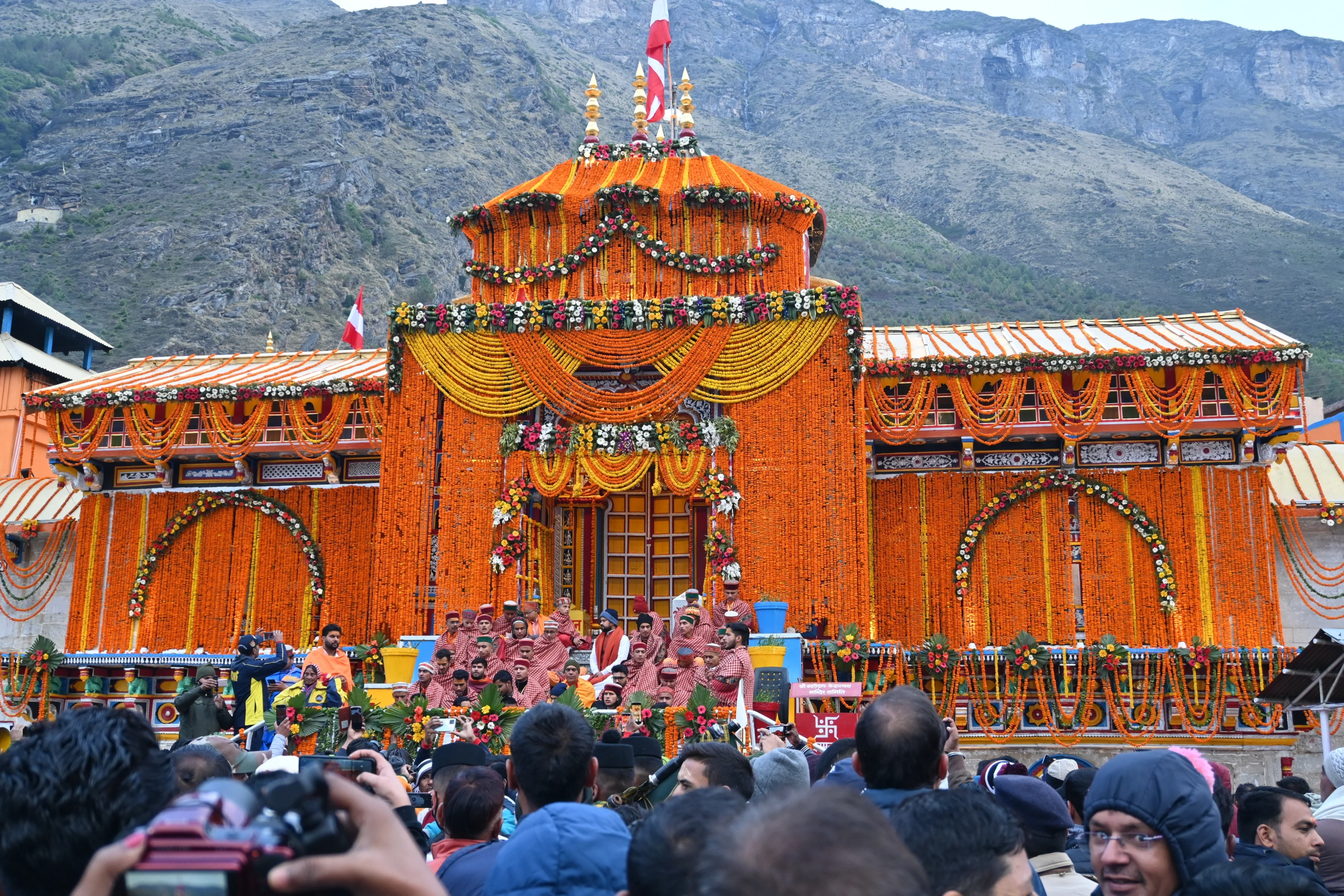
Festivals at Badrinath Temple are colorful, joyful, and deeply spiritual. Each festival connects to the history and story of Badrinath Temple, making it very meaningful for devotees. These festivals show how alive and vibrant the temple culture is. Each celebration keeps the ancient story of Badrinath Temple alive for new generations. Some of the famous festivals celebrated at Badrinath Temple were:
Badri Kedar Festival
- It is held in June every year
- It was celebrated in both the Badrinath and Kedarnath temples
- Classical music, dance, and cultural programs are held during this festival.
- It shows the rich heritage of Uttarakhand
Mata Murti Ka Mela
- It is the festival dedicated to the mother of Badrinarayan
- It was celebrated in the month of September
- During this festival, a large fair is organised near the temple
Vijayadashami / Dussehra
- This festival marks the beginning of winter preparations. Special aarti and rituals take place inside the temple
Closing Day (Bhai Dooj or Diwali)
- It is one of the most emotional days for the people of Badrinath.
- During this period, priests perform a long ceremony, and the idol of Lord Badrinarayan is moved to Joshimath for the winter
Opening Day (Akshaya Tritiya)
On the opening day of the Badrinath temple priest open the temples of doors after months of snow. Many devotees visits Badrinath temple on this day to take the blessings of lord vishnu.
Conclusion
The story of Badrinath Temple shows how faith, nature, and history come together in the Himalayas. Every part of the story teaches us devotion and kindness. When Adi Shankaracharya rediscovered the temple and restored its importance, he made sure that future generations could connect with this sacred place. People from various regions come here to take blessings and to feel the calm of nature. The festivals celebrated at the temple add even more color and energy to the whole experience. Everyone is greeted with warmth and hope at Badrinath, regardless of whether they are there for spiritual purposes or to take in the natural beauty.
