
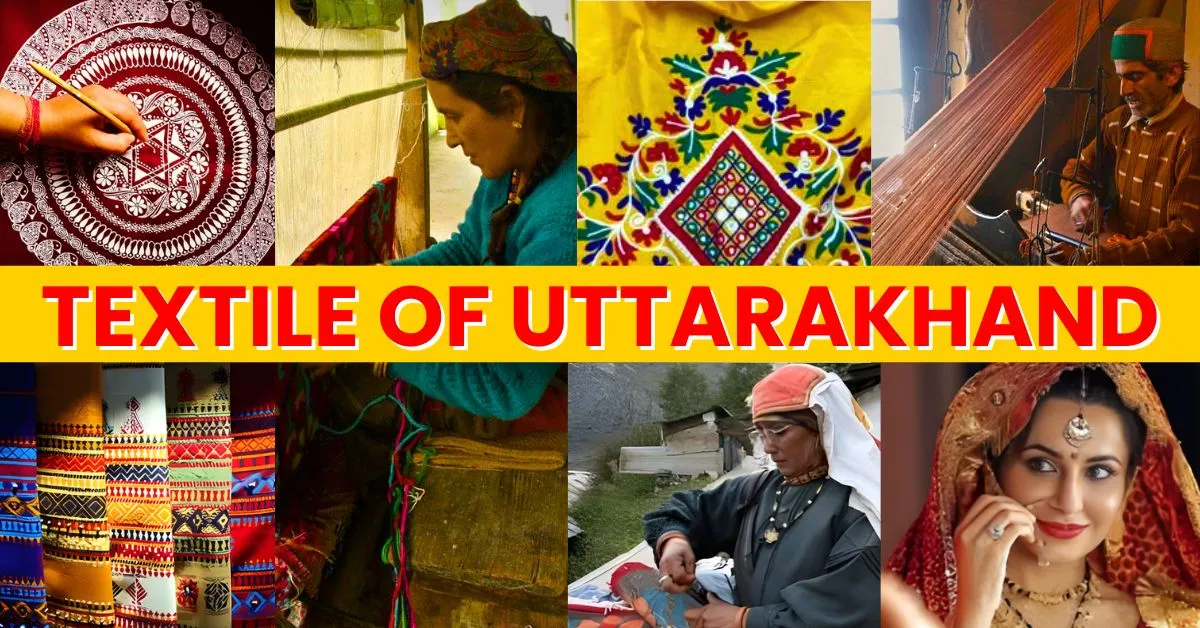
Uttarakhand is generally a Himalayan region here cold weather exists for a major part of the year. During cold weather you will see in villages women sit together, chatting, laughing, and weaving warm fabrics that reflect the simple yet colourful lifestyle of the hills. The textile of Uttarakhand has a long and rich history. In uttarakhand you will see everything is organic and connected to land. As you will see people raising sheep in high altitude used wool for weaving and also they use natural dyes found from plants in nearby forest. These textiles have become popular in India and other countries. People like them because they are authentic, made by hand, and feel personal, not just because they are fashionable.
Each item, such as a warm wool blanket, a handmade rug, or a decorative scarf, shows the unique skill of the villagers who created it. In this article we will know about the textile of uttarakhand and the techniques used to make that textiles.
Traditional Raw Materials Used in Textile Of Uttarakhand
The textile of Uttarakhand is more special because they are made from the natural fibers and dyes that come from the natural plants and animals. By using traditional weaving techniques, the people of villages show their skills in their art and craft. Some of the traditional raw materials used in textile of uttarakhand were:
Wool Fiber
Wool is a textile fiber obtained from sheep. It provides maximum warmth and durability. In Uttarakhand, it generally comes from three different sources:
- Sheep : Sheep wool is most widely used raw material in Uttarakhand. In cold areas like Chamoli, Pithoragarh and uttarkashi people rear sheep for obtaining wool. This wool is perfect for making blankets, carpets, shawls, jackets that can protect from cold weather.
- Pashmina: Pashmina wool is obtained from a type of breed of goat known as Changthangi or Pashmina goat that is found in cold Himalayan regions. The fibre of this wool is soft and delicate used to make different woollen products like pashmina shawls etc.
Plant-Based Fibres
Uttarakhand has various plant based fibres that are used by traditional local peoples to produce products like ropes, clothing and domestic items. Some of the plant based fibres used in uttarakhand textile were :
- Bhimal – This plant fiber is used to make the ropes, mats and baskets. Also their leaves is used as fodder for animals. In villages people used it as a shampoo.
- Ringaal – It is a type of dwarf bamboo that is found in the Himalaya region. It is known for its flexibility. It is used for making baskes,mats, and fashionable handbags.
- Nettle fiber – It is used to make products like shawls, bags and home furnishing items. Traditionally it was used to make fishing nets and ropes.
Natural Dyes from Forests and Fields
In Uttarakhand, earlier when chemical dyes are not there people weaved clothes and coloured their threads using the natural dyes that is produced from plants. Today also in textile of Uttarakhand instead of using chemicals, they prefer only natural dyes that are produced from flowers and plants. Some of the natural dyes were:
- Walnut shells are used to give rich brown shades.
- The flower burans (Rhododendron) is used to give brown or maroon colour.
- Pomegranate peels used to give yellow tones.
- Indigo, grown in some regions, gives beautiful blue tones.
The Role of Uttarakhand’s Tribal Communities in Textile Of Uttarakhand
The weaving textile traditions of Uttarakhand are preserved by the tribes of Uttarakhand. Their unique skills and knowledge are passed to their generation. Across all the tribes, women are the backbone of this textile heritage. Their dedication to their work preserving techniques makes the textile of Uttarakhand remains alive for so long.
The Role of the Bhotiya Community
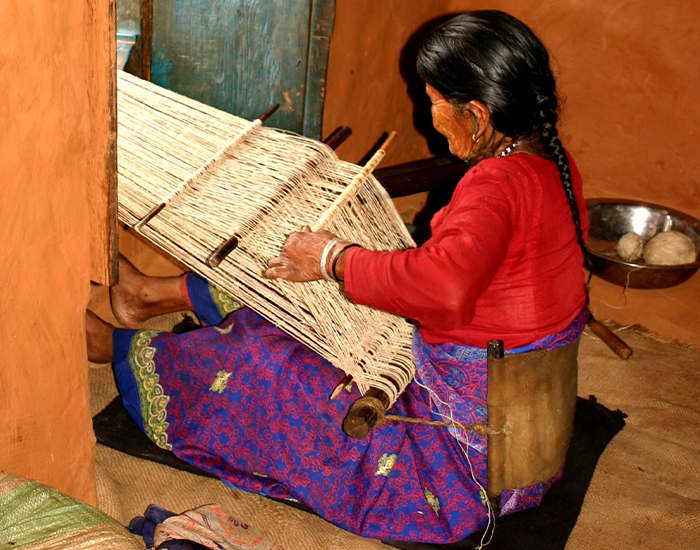
The bhotia tribes community lives in the high altitude of the Garhwal and Kumaon. They rear sheeps, goats that give them raw materials for the textiles. They weave woolen clothes mostly. Most common woollen products they made were : pashmina shawls, pankhis (light wool shawls), carpets, jackets, and blankets. With time they improve their weaving skills and now they become the most skilled weavers in Uttarakhand.
Role of the Jaunsari Community:
The Jaunsari tribe lives in the Jaunsar-Bawar region of Dehradun. Jaunsari women are skilled weavers who create a variety of items for daily use like mats, ropes, and traditional woollen garments like shawls and blankets. Their weaving are related to their cultural heritage and their daily life. Men dress in woolen robes called Chora and long woolen pajamas called Jhangel. Women dress in Ghagra, a long, pleated skirt, and Cholori, a woolen top.
Role of the Tharu Community
The Tharu tribe is primarily found in districts like Udham Singh Nagar in Uttarakhand’s Terai region, which is the plains close to the foothills. The tharu community people focus more on cotton and decoration. This community uses handlooms and embroidery techniques to create beautiful decorative items for home such as wall hangings, cushions, and traditional pieces, are created in this way as well.
Famous Handwovens Textile of Uttarakhand
The skills of weavers of uttarakhand has transform the simple raw wool into beautiful designs clothes. Their handwoven products are soft and give warmth. If you visit the Garhwal or Kumanon region of uttarakhand you will see the beautiful designs and patterns textile in there nearby markets that are made by the local peoples of area. Here are some of the famous handwovenn textiles of uttarakhand:
Woolen Shawls
- Pankhi Shawl: In uttarakhand Pankhi is represented as the symbol of honor. It is also called as Pahadi shawl of uttarakhand. It is made from pure sheep wool mix withe fine fibers.
- Pashmina Shawls: These shawls is famous not only on uttarakhand but also globally. These shawls are made from wool that is produced by Changthangi goat. It is so soft, lightweight and warm shawl.
The Kumaoni Pichora
Pichora: It is a traditional dupatta wear by womens in Kumaon region It is worn by women during the religious ceremonies and weddings. It is a hand printed pichora made of only using two colours red and yellow. It contains red moftis against a yellow background.
Hand-Knotted Carpets
Another important craft is carpet weaving, particularly in the Bhotia regions close to Tibet region. The carpet made is using thick wool.
- Dann (or Dan): These are the traditional hand-knotted woollen carpets made by bhotia tribe peoples. It is known for its warmth that are used in homes.
- Asan: A common Indian word for a sitting mat or small rug, “asan” is frequently used to refer to a smaller hand-knotted piece or a particular regional style of the same. It is a square or rectangle shape rup used for sitting on the floor, people often used it for prayer.
Blanket
Blanket is one of the important winter essential. These are the most traditional and practical textiles, mainly woven by the Bhotiya community.
- Thulma: Made from sheep wool, this blanket is heavy and extremely thick. The finished fabric is expertly brushed to produce a shaggy, soft surface that is incredibly warm and that is perfect for the chilled weather of the Himalayas.
- Chutka: It is a heavy, thick traditional woolen blanket woven by bhotia tribe people. It is produced in distinctive regional styles on vertical/backstrap looms in Kumaon and Garhwal, and it can be used as bedding, rugs, or cold coverings.
The Aipan Art in Textiles
While Uttarakhand’s famous blankets and shawls are known for their weaving, the decorative elements of the textiles often feature designs taken from Aipan, a popular local folk art.
What is Aipan art?
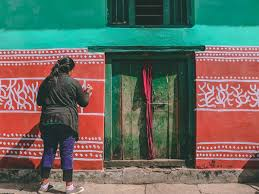
In Kumaon region its a tradition generally in Diwali festival women’s draw beautiful design of aipan art on the entrance of their home as they believed it brings good fortune to them. They use white paste made of rice flour to make the designs on the empty walls or entrance which are painted red in color called Geru. This Kumaoni folk art also received GI certificate in septemper 2021.
The Impact of Aipan on Handlooms
Uttarakhand textiles have a unique cultural identity because of the use of aipan art applied by weavers and embroiderers of uttarakhand. Some of the fabrics where these aipan art are used were:
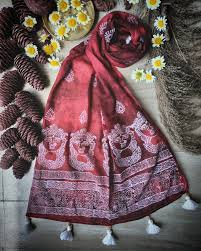
- Aipan on Shawls and Stoles – The geometric and detailed lines of Aipan are perfectly suited for needlework. You will often see these patterns embroidered onto the borders of Pahadi shawls, scarves, and also you will see the beautiful design of aipan art in kumaoni pichora.
- Bags and Home Decor – The Aipan designs are perfect for block or screen printing on textiles used in home furnishings (such as cushion covers, bags, and sarees). This preserves the traditional appearance while making the product more affordable and accessible.
- Apparel & Accessories – Now you can find aipan designs on clothing also. Different patterns of aipan styles is applied on the apparels that make them more attractive.
Conclusion
More than simply producing goods, textile of Uttarakhand offer a living cultural history of the Himalayas. The journey of these textiles dates back to antiquity, originating on the Indo-Tibet trade routes. The use of textiles for everyday survival has been an essential part of Bhotiya culture. Some of these textiles feature decorative designs that beautifully incorporate the artistry associated with Aipan.
Purchasing a Thulma or Pahadi shawl contributes to supporting skilled embroiderers in communities such as the Jaunsari and Tharus, who have developed their trade through generations. This is our duty to preserve these traditions by supporting artisans in their work. When we use something handmade from Uttarakhand its not just a product its gives us a piece of history, a piece of culture and the beauty of the Himalayas.
Also Read This: From Harela to Egaas – Famous Festival of Uttarakhand That Celebrate the Spirit of Devbhoomi

