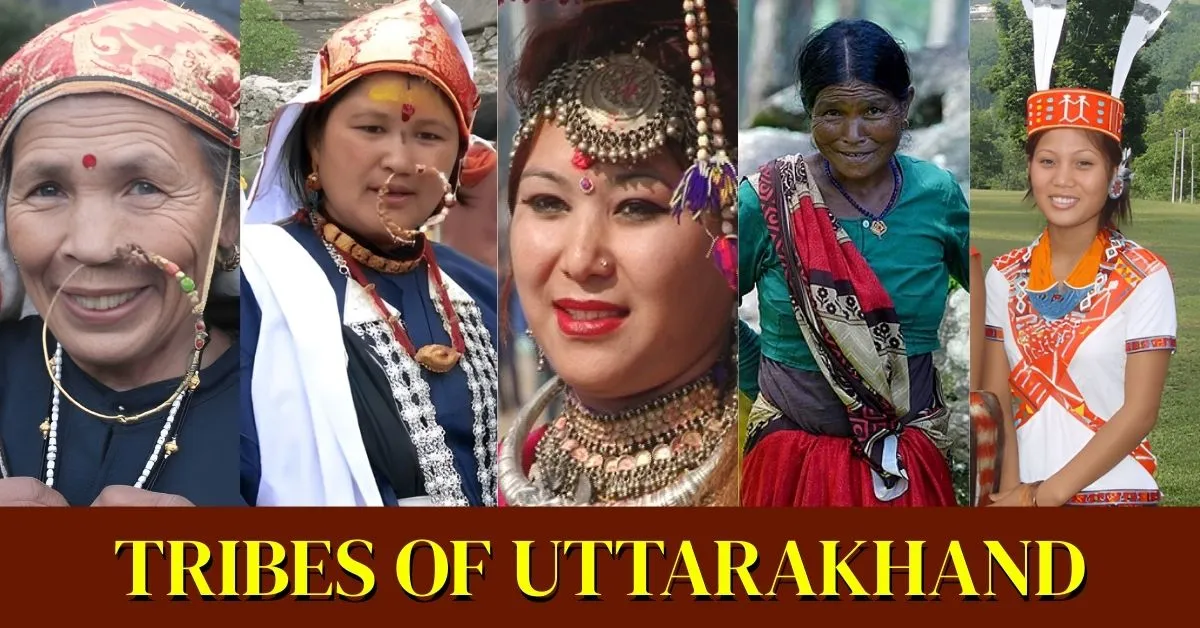
Uttarakhand is not only famous for its natural beauty, temples, and mountains, but also for its rich tribal heritage. A tribe is generally a large community or the group of people that have common ancestors, culture, language and traditions that often lives in specific area. The tribes of Uttarakhand have preserved their traditional way of life, customs, and value systems for centuries. The Uttarakhand tribes is recognized as the Schedule tribes.
Who Are the Tribes of Uttarakhand?
The tribal people of Uttarakhand are the local communities who have lived in the Himalayan region for centuries. They had preserved their own traditional culture, lifestyle, language, and various earlier practices that make them different from the rest of the population. These people depend on nature, forests, mountains, and local resources for their livelihood.
In Uttarakhand, most tribal communities live in remote, high-altitude Himalayan areas or dense Terai forests. In Uttarakhand, you will find tribal people in Pithoragarh, Chamoli, Uttarkashi, and the Jaunsar Bhabhar area of Dehradun district.
Five Major Tribes of Uttarakhand
Uttarakhand is the home of the some of the major tribes. The five major tribes of Uttarakhand were :
- The Jaunsari Tribe of Uttarakhand – The largest tribal group of uttarakhand
- The Tharu Tribe of uttarakhand
- The Bhotia Tribe of uttarakhand
- The Buksa Tribe of uttarakhand
- The Raji Tribe of uttarakhand
Lets know more about these tribes of uttarakhand.
The Jaunsari Tribes of Uttarakhand

The Jaunsari tribe of uttarakhand are the largest tribal group in the state by population. They mainly live in the Jaunsar Bawar region, which includes the area of the Dehradun and Uttarkashi districts. They are recognized as Scheduled Tribe in 1967. Mahasu Devta was the main deity for the Jaunsari people. They celebrate their festivals with dance and music. The folk dance of jaunsaris include Barada Nati, Harul, Budiyal, Ghundiya Raso and Jhenta Raso. The Jaunsari people consider themselves to be the descendants of the Pandavas. Earlier jaunsari people follow the tradition of polyandry marriage traditions where brother shares a common wife but this tradition is declined in the modern times. Their traditional clothing is mainly made of wool; the men wear Jhangel (pyjama) and woolen top known as Chora (robe), and the women wear sharply pleated Ghagra (skirt) and it is paired with jhagga and wear a waistcoat with a scarf on head known as Dhantu. Moroj & Bissu are the famous fair of the Jaunsari tribes of Uttarakhand.
The Tharu Tribes of Uttarakhand

The Tharu tribe is the second-largest tribal population in the state and lives in the Terai region of Udham Singh Nagar. Their cultural ethnicity is similar to Tharus found on the other side of the border in Nepal and in Uttar Pradesh and Bihar. The Tharu tribe has a matriarchal characterstic that is they have history of women holding important decision making power and superio property rights as compared to other communities.The Tharus have a rich wealth of cultural life, dialects, and customs. Women wear colorful clothes in bright, traditional styles, along with heavy silver jewelry. The famous festivals of the Tharu tribes of Uttarakhand were Maghi, Jitiya, Gurahi, and Barna. Tharu people consider themselves to be the decendents of Rajputs.
Also Read this: Winter Treks in Uttarakhand, famous dance of Uttarakhand, 10 famous temples of uttarakhand
The Bhotia Tribes of Uttarakhand

The Bhotia tribes of Uttarakhand are a unique community living in the high mountain districts of Pithoragarh, Chamoli, and Uttarkashi. In the Kumaon region, they are often called Shauka.Bhotia tribes have many sub tribe including Marcha, Jauhari, Tolcha, Shauka, Jarh, etc. Since 2001, they have been officially recognized as a Scheduled Tribe. Earlier, their lives revolved around the famous Indo-Tibetan trade, but after 1962, they shifted their focus to raising animals, small-scale farming, and gathering medicinal plants. They migrate to high-altitude meadows called Bugyals in the summer and move back down to lower valleys during the winter. They follow Hinduism with Buddhism. They are well-known for producing pure wool hand-knot Bhotia Dann (carpets).The famous festival of the Bhotia tribes of Uttarakhand was Losar (Tibetan New Year) and the Kangdali Festival.
The Buksa (Boksa) Tribes of Uttarakhand

The Buksa or Boksa tribes of Uttarakhand is mainly found in the Bhabar and Terai regions, especially Nainital and Dehradun districts. Boksa of Uttarakhand were classified as a Scheduled Tribe in 1967. They considered themselves to be the descendents of Pawar Rajputs. Traditionally the Buksa people were famous for hunting, but today they are mostly farmers who grow crops like rice, wheat, and maize. The Buxa tribe has the traditional community goveranance system i.e. Biradari Panchayat that helps them to settle disputes and maintain order. Their traditional attire is colorful and adorned with silver jewelry. The Buksa tribes of Uttarakhand celebrate major Hindu festivals such as Holi, Diwali, and Janmashtami with great joy.
The Raji Tribes of Uttarakhand

The Raji tribe is known to be the smallest tribal group in Uttarakhand. It is one of the smallest endangered community in the Kumaon region. It is recognized as Particularly Vulnerable Tribal Group (PVTG). They lives in the remote areas of Pithoragarh and Champawat districts. They are known as the Van Rawat (Kings of Forest). Traditionally, they are hunter-gatherers and follow a nomadic lifestyle, participating in barter trade in the past. Earlier they are famous for their “Silent Trade,” where they leave handmade wooden goods outside villages at night and collect food or clothes left in exchange, as they avoid direct contact with outsiders due to their shy nature. But, today they are highly skilled woodworkers who carve beautiful bowls and tools, and also many of them shifted toward small-scale farming. They speak a Tibeto-Burman language known as Raji or Raji Boli that reflects their unique and isolated cultural identity.The famous festival of Raji tribes of Uttarakhand were Gaura, Makar Sakranti, Harela, Dashain, and Basant Panchami.
Conclusion
The tribes of Uttarakhand represent the state’s rich culture and diverse history. Despite modern changes, they have preserved their ancient traditions, languages, and deep bond with the Himalayan environment. Their simple lifestyle, colorful clothing, and traditional music show a harmonious way of living that adds great value to the region. By keeping their unique social and cultural history alive, these communities remain a vital part of what makes Uttarakhand special.

