Ghee Sankranti Festival of Uttarakhand: Significance, Rituals & Health Benefits

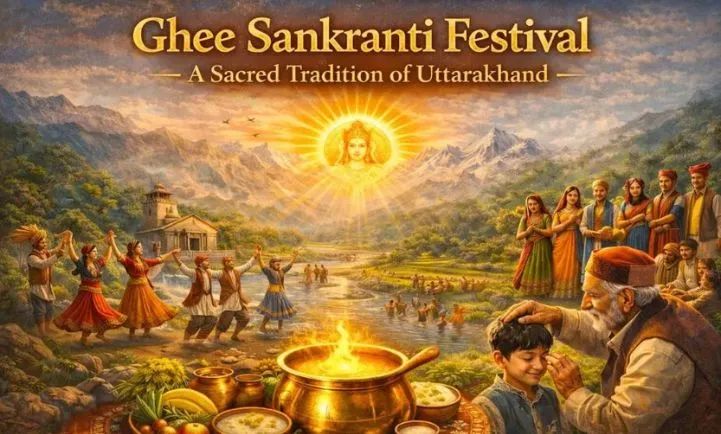
Ghee Sankranti is a traditional indian festival that is celebrated in both regions of Uttarakhand- Garhwal and Kumaon. When the Sun God changes his zodiac sign in the month of Bhado, that transition is called Singh Sankranti. During this period, consuming ghee holds special significance. The month of Bhado is also known as Bhadrapada and is the second month of Chaturmas. Since the use of ghee is mandatory on this day, it is also called Ghee Sankranti. This festival is also known as Ghee Tyar, Olgia, or Gatiyar.
Sankranti is not just a festival for the people of Uttarakhand but a large part of their cultural and religious identity. On this day, donating ghee, bathing, worshipping, and following traditional customs not only bring happiness and prosperity but also provide a person with a deep connection to nature. In today’s article, we will know more about ghee sankranti festival, how it is celebrated, and what the story is behind this festival.
When is Ghee Sankranti Celebrated
In Uttarakhand, every Sankranti is considered the first day of the month. The significance of this day is not only religious but also connected to nature and health. Along with worship and prayers for a good harvest, ghee and traditional delicacies are consumed to provide strength and energy to the body. Ghee Sankranti is celebrated on a Sankranti day. It is celebrated in the first month of Bhado, which falls in August and September.
Earlier, people said that the body needs extra care during seasonal changes. Digestive strength can fluctuate, and immunity may weaken. Ghee Sankranti encourages the consumption of ghee to support digestion and provide warmth, especially when moving into cooler or drier seasons.In Ayurveda and the Charak Samhita, it is described that pure cow ghee (Desi Ghee) enhances intelligence, energy, memory, strength, and vitality. Cow ghee is known to balance Vata and Pitta, and is considered a destroyer of fever and toxic substances.
Folk story of Ghee Sankranti
On this day, elders place ghee on the heads of children while blessing them, and in some places, it is also applied to the knees and elbows. There is a folk belief that if you do not eat ghee on this day, you will be reborn as a snail in your next life. This is because a snail is sluggish, whereas ghee makes the body active and strong.
According to ancient beliefs, consuming ghee on this day protects one from the inauspicious effects of the planets. It keeps the skin safe from monsoon-related diseases and sharpens the intellect. The Olgia tradition is also associated with this day, where milk, curd, fruits, and seasonal vegetables are given as gifts to one another. This tradition has been ongoing since the time of the Chand kings and continued even during British rule.
Regional Names and Variations of Ghee Sankranti
Even though the festival is the same, people in different areas call it by different names. Here are the most common ones: These variations reflect the linguistic diversity of the Pahari people.
1. Olgia (Kumaon Region)
In the Kumaon region of Uttarakhand, the festival is famously known as Olgia.
- The Origin: The name is derived from the word “Olag,” which refers to the traditional gifts of ghee, curd, and agricultural tools presented to elders and patrons.
- The Variation: Here, the focus is heavily on the social hierarchy and the gifting of handmade items like Binai (a small iron harp) and Datkhocha (metallic toothpicks).
2. Ghyu Tyar (Garhwal Region)
In the Garhwal region, the festival is called Ghyu Tyar.
- The Meaning: “Ghyu” is the local Pahari word for Ghee, and “Tyar” means festival.
- The Variation: In this region, the ritual of applying ghee to the forehead and the crown of the head is particularly emphasised. Families gather to eat stuffed dal paratha that is fully drenched in melted ghee.
Traditional Rituals and Worship of Ghee Sankranti
Special prayers and customs are followed in Uttarakhand on the day of Ghee Sankranti. On this day, people bathe on the banks of holy rivers like the Ganga, the Yamuna, or other local rivers. It is believed that taking a dip of faith in the river and worshipping Lord Surya brings infinite merit. By offering Arghya to the Sun and donating ghee, happiness, prosperity, and health come into a person’s life. There is also a tradition of consuming ghee on this day, about which it is said that it keeps a person healthy and free from diseases throughout the year.
Method of Worship (Puja Vidhi)
Bathing: Bathe in a holy river or at your home in the morning.
Sun Worship: Offer water, flowers, and Akshat to the Sun God.
Donation of Ghee: Donate pure desi ghee to a needy Brahmin or temple.
Meditation and Mantra Chanting: Chant the Sun Mantra “Om Suryaya Namaha.”
Gifting Dishes: Gift ghee, curd, and good dishes to your loved ones.
Regional Traditions
In ancient times, people used to present gifts of ghee, curd, butter, and delicious dishes to their kings, loved ones, and gurus. According to the scriptures, the fodder eaten by cows in the month of Bhadrapada includes many grasses with rare medicinal properties. The milk obtained from this fodder and the ghee made from it is extremely nutritious and full of medicine. This ghee not only gives strength to the body but also increases intelligence and health. That is why the tradition of donating and consuming ghee on this day is considered a symbol of good luck and health.
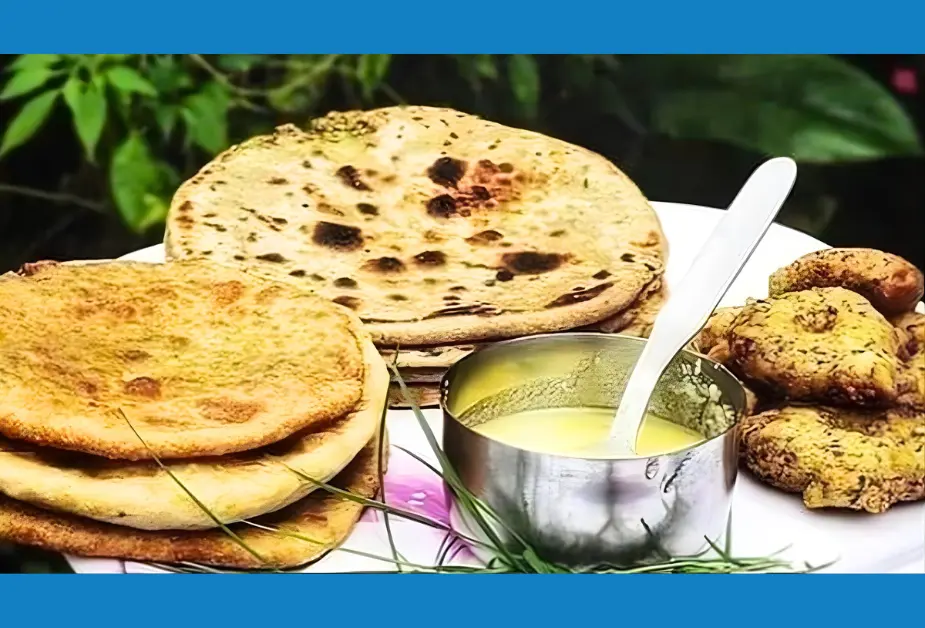
On Ghee Sankranti, the aroma of traditional dishes spreads through every home. Puri, Arbi leaf vegetables, aloo sabji, Kheer, and the special stuffed Daal Roti are prepared. Pahari cucumber Raita is the highlight of this festival. In Garhwal, it is called Ghiya Sangrant. In some places, there is also a tradition of planting Mahel branches in the paddy fields. Also, folk dances like Jhora and Chachari are organised during this ghee sankranti festival.
Health and Ayurvedic Importance of Ghee Sankranti
Eating ghee can benefit our body, brain, and beauty. Various ayurvedic benefit is hidden behind the ghee. Ghee Sankranti is a happy social festival that also comes with various ayurvedic benefits for our body. Our ancestors began this practice of eating ghee, and now it is scientifically proven that eating ghee during the monsoon season is very good for the body. Let’s check some of the benefits of eating ghee during Ghee Sankranti:
- Strengthening Immunity – In Ayurveda, ghee is known as a “super food” that promotes healthy immunity. The Ghee Sankranti Festival is celebrated during the monsoon season (rainy) when the weather is wet and warm. This time of year tends to create an abundance of colds and respiratory infections and therefore, eating pure ghee helps build your body’s resistance to colds and other seasonal illnesses, while strengthening your immune system.
- Lubrication for Joints – Ghee serves as a natural lubricant for the body. The cold, wet weather of the monsoon season tends to create joint stiffness, pain, and discomfort. Consuming ghee and applying it externally will help keep your joints limber (or “oiled”) and therefore avoid any sluggishness related to the monsoon season.
- Boosting Brain Power and Digestion – Ayurveda calls Ghee, “Medhya” or brain tonic to the brain. When applied directly on the forehead, it calms the nervous system and helps improve both memory and concentration abilities. During monsoon rain, digestion tends to slow down. Ghee will help to increase the amount of gastric acid present in the stomach and to improve the ability of your body to digest foods, particularly heavy Urad Dal (or lentils) eaten during a holiday.
- Skin and External Protection – In the hills, the monsoon brings a lot of moisture and insects. Applying Ghee to your skin creates an external barrier; it prevents the skin from becoming too dry or infected, which could result from constant contact with rain or mud.
Conclusion
Ghee Sankranti is a unique folk festival of Uttarakhand, which is known for its simplicity and deep cultural values. Ghee Sankranti is such a festival of Uttarakhand, which is a confluence of nature, health, and faith. This festival not only has religious and cultural importance but also increases social unity and awareness towards health. Ultimately, the message of Ghee Sankranti is to cherish our culture, our festivals, and our traditions so that this heritage remains alive for future generations.
Watch This also : Uttarakhand में इस दिन घी खाना क्यों है जरूरी। नहीं खाया तो फिर क्या होगा। Ghee Sankranti
